Is BJJ or karate better for kids?
Neither is better outright. BJJ (Brazilian Jiu-Jitsu) is a grappling art that teaches control, leverage and calm problem-solving on the ground. Karate is a striking art built on punches, kicks, blocks and forms. The right fit depends on your child's temperament, how they handle contact and what genuinely draws them in.
Key takeaways
- BJJ (Brazilian Jiu-Jitsu) is a grappling art. Children learn control, leverage and calm
problem-solving on the ground, with submissions taught slowly and with control.
- Karate is a striking art. Children learn punches, kicks, blocks, stances and forms, with a
clear belt structure and a strong focus on discipline.
- The biggest difference is how they spar. In kids BJJ, children do live supervised practice
(rolling) early. In many karate programs, sparring is light-contact, point-based and introduced later.
- Neither art is better. The right fit depends on your child's temperament and what pulls them in.
- One free class tells you more than any comparison, and there is no equipment or experience needed.
What does each martial art actually teach a child?
The clearest way to think about BJJ vs karate for kids is grappling versus striking. They are two different answers to the same question of what to do when someone is closer than you would like.
BJJ is grappling. It happens mostly on the ground, which matters because so many real-world scuffles between kids end up on the ground anyway. A child learns to control positions, to escape when they are underneath, and to use leverage so that size matters less than technique. Submissions, which are joint locks and chokes, are taught patiently and always with a partner who can "tap", a quick signal that means stop. Coaches introduce them slowly and with heavy supervision.
Karate is striking. A child learns to punch, kick, block and move through stances, and to string those movements into kata, which are choreographed forms practised solo. There is real value in that structure. Kata builds coordination, memory and body control, and the belt system, running all the way to a black belt, gives a young child a visible ladder of small wins. In kids karate classes, kids learn those basics through repetition before any contact, and a good kids program keeps the groups small so each child is seen. Karate teaches respect and self-control as seriously as any art does, and the same is true of related striking styles like taekwondo.
Both build confidence the same quiet way, through focus, listening, coordination and the habit of showing up. The difference is the toolkit, and that is what your child will feel on the first day. If you want the grappling side in more detail, our kids BJJ page walks through how a class actually runs.
How is sparring different in BJJ and karate?
This is the difference many parents care about, because it is really a question about contact and safety. In kids martial arts, grappling versus striking changes what sparring looks like.
In kids BJJ, children start live practice, called rolling, within their first few weeks. It looks like supervised wrestling with rules. There are no strikes, nobody is hitting anyone, and a coach is standing over every pairing. A child learns early that being held down is uncomfortable, not dangerous, and that they can stay calm and work out of it.
In many karate programs, sparring (called kumite) is light-contact or point-based, players wear pads, and it is often introduced later once a child has the basics. That is a sensible, careful approach. The honest trade is that a striking match rewards speed and distance, while grappling rewards patience and problem-solving. Kids who dislike being hit sometimes prefer grappling. Kids who dislike being grabbed sometimes prefer striking.
BJJ vs karate for kids: a side-by-side comparison
| What matters to a parent | BJJ (grappling) | Karate (striking) |
|---|---|---|
| What it teaches | Ground control, escapes, leverage, joint locks and chokes taught with control | Punches, kicks, blocks, stances and kata (solo forms) |
| How sparring works | Live supervised rolling early, no strikes, tap to stop | Light-contact or point-based kumite, with pads, usually introduced later |
| Physical style | Close, tangled, weight and leverage | Upright, distance, speed and timing |
| Suits a child who | Likes wrestling and staying close, thinks under pressure, stays calm being held | Likes to move and kick, wants clear belt milestones, dislikes being grabbed |
| Builds most visibly | Composure under physical pressure, patience | Coordination, timing, disciplined structure |
Which martial art suits which child?
A child who wrestles with siblings, likes being physically close and stays composed when pinned tends to take to grappling quickly. A child who is always moving, loves to kick and thrives on a clear sequence of belts often clicks with striking and the structure karate is known for. Neither of those is a personality test, and plenty of kids surprise their parents. So the best martial art for children is rarely the one that looks best on paper, it is the one your child wants to come back to. This is why a trial class is worth more than any chart. Our programs page lays out the age groups so you can picture where your child would fit.
Marc and Jen L, a Findlay Creek couple, spent a summer stuck between the two. Their seven year old was active and a little shy about contact, and they assumed karate because it was the name they knew. They booked a free BJJ class first, mostly to rule it out. He spent the session laughing through a game of grip-and-escape, tapped a coach on the shoulder and asked to come back on Saturday. They still speak well of the karate club they visited. Their son simply felt more himself on the mats, and that was the answer they had been looking for.
What neither martial art will do
Here is the part the comparison pages skip. No martial art, grappling or striking, will guarantee your child is never bullied, and none of them fixes or cures a condition. A first-year student is not a fighter and should not be treated as one. What good training honestly gives a child is composure under physical pressure, the confidence that comes from handling contact calmly and the option to stay in control rather than escalate. That sits alongside the school and the adults in your child's life, never instead of them.
What this looks like at Gracie Barra Manotick
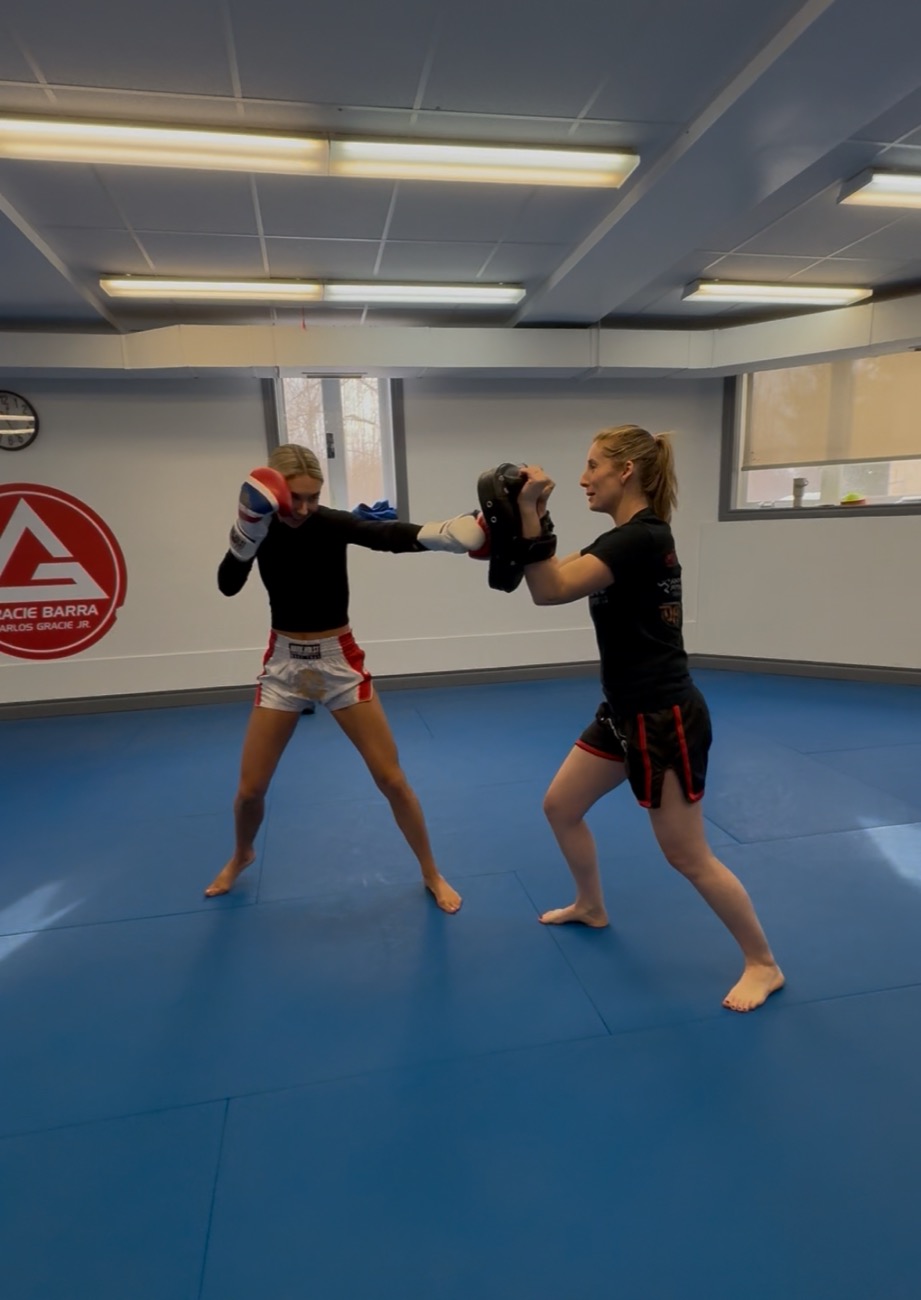
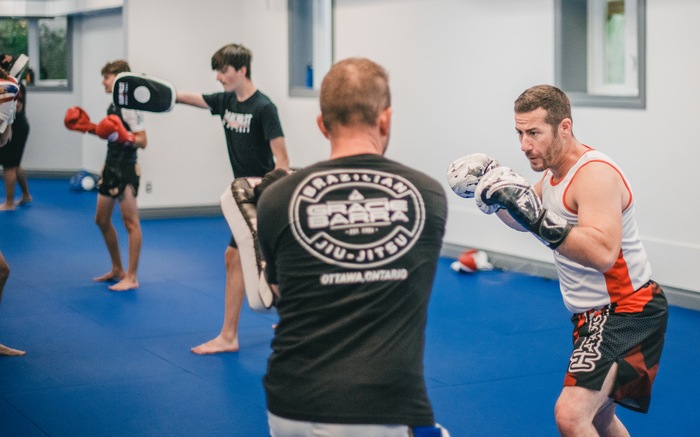
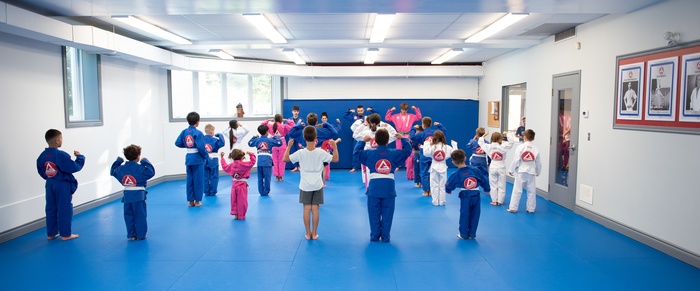
We are a Brazilian Jiu-Jitsu academy at 5700 Longshadow St in Manotick, so we will be straight with you: we teach grappling, and kids striking through our Muay Thai program, not karate. Our kids martial arts program starts young: Tiny Champions runs for ages 3 to 5, and Kids Jiu-Jitsu covers ages 6 to 13. Coach Panda Dave leads a team that teaches hands-on rather than watching from the side, and families drive in from Riverside South, Findlay Creek and across south Ottawa. You can see the full week on our schedule. If grappling sounds like your child, the best next step is to watch them try it once.
Choosing, answered.
Is BJJ or karate safer for a young child?+
Both are safe when a class is small and well supervised. BJJ removes strikes entirely, so kids grapple rather than hit, while karate manages contact through pads and light or point-based sparring. The real safety factor is coaching quality and group size, not the style on the sign.
At what age can kids start BJJ or karate?+
Most children can start either one around age 3 to 5, though readiness is about behaviour more than birthday. A child who can follow a two-step instruction, stay with a group and tell an adult when something hurts is usually ready. Our Tiny Champions group starts at age 3.
Does karate or BJJ work better for self-defence for kids?+
Both help, in different ways. Grappling teaches a child to stay calm and in control when someone is close, and striking teaches distance and timing. No art guarantees an outcome, and the most useful skill either one builds is the composure to avoid a fight rather than win one.
Can my child try both before deciding?+
Yes, and we recommend it. A single trial class shows you more than any comparison, because you watch which room your child does not want to leave. Our first class is free, with no experience and no equipment needed.