What age can a child start kids martial arts in Ottawa?
Most children can start kids martial arts in Ottawa at about age 3, but the honest answer is behavioural rather than a birthday. A child is ready when they can follow a two-step instruction, stay with a group, tell an adult when something hurts and be close to other children. Age is a rough guide. Behaviour is the real test.
The readiness signs that matter more than a birthday
A martial arts program is not a birthday club. Two children the same age can be a year apart in the things that actually make a class work, so this is what we watch for on a first visit. None of it requires your child to be athletic, confident or outgoing.
Can they follow a two-step instruction?
This is the big one. "Put your water bottle down and sit on the line" is the shape of almost everything a coach says in a kids class. The CDC's developmental milestones put two- and three-step directions at around age 3, and most children we meet can manage it by four. Test it at home when your child is a little excited or distracted, because that is the version we get on the mat.
Can they stay with a group for half an hour?
Not sit still for half an hour. No four year old does that, and any martial arts school promising it is describing a room you would not want your child in. The CDC puts sustained attention at roughly five to ten minutes for a five year old, which is why our youngest class runs as a string of short games, short drills and short rests rather than one long lesson. The question is whether your child can come back to the group after each break, not whether they can hold focus straight through.
Can they tell a coach when something is wrong?
This one is not negotiable, because it is a safety rule rather than a nice-to-have. A child needs to be able to say "stop," "that hurts" or "I need help," or use a signal a coach can read across the room. In grappling especially, the tap, which means a light tap on your partner to end the exercise immediately, only works if a child will actually use it.
Are they all right being close to other kids?
Martial arts involves contact. Your child does not need to love it, and they certainly do not need to be forced into it. What they need is to be able to stand near other children without being overwhelmed, accept an explained touch like a high five or a coach adjusting a hand, and both say stop and respect another child's stop.
Is my child ready for martial arts? A quick parent checklist
Run through this at the kitchen table before you book anything. Three or four yes answers is plenty to start with.
| Readiness sign | What it looks like at home |
|---|---|
| Two-step instructions | "Get your shoes and come to the door" works without three reminders |
| Re-engaging | They wander off mid-activity but come back when called |
| Separation | They settle within about ten minutes after you leave |
| Speaking up | They tell you when something hurts, itches or scares them |
| Proximity | They can play beside other children without needing to be peeled away |
| Movement | They run, jump, climb and get up off the floor with confidence |
How our martial arts academy groups the youngest students
We do not put a four year old in with a nine year old and hope for the best. Our kids martial arts classes are split by age first, because a room of similar-sized children is the single biggest safety factor in the whole building.
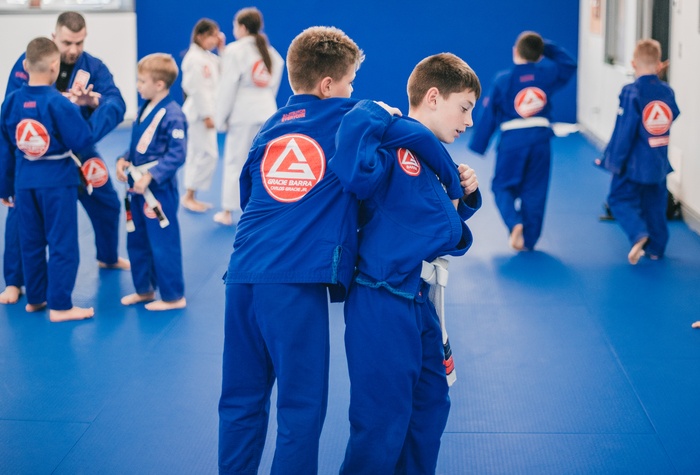
- Tiny Champions, ages 3 to 5. Monday to Friday at 5:00 PM and Saturday at 10:00 AM. Short
segments, animal walks, balance games, listening games and the first pieces of Jiu-Jitsu, which is the grappling art of controlling and being controlled on the ground.
- Kids Jiu-Jitsu, ages 6 to 13. Monday to Friday at 5:45 PM and Saturday at 10:30 AM. More
structure, more partner work, real martial arts techniques taught in order.
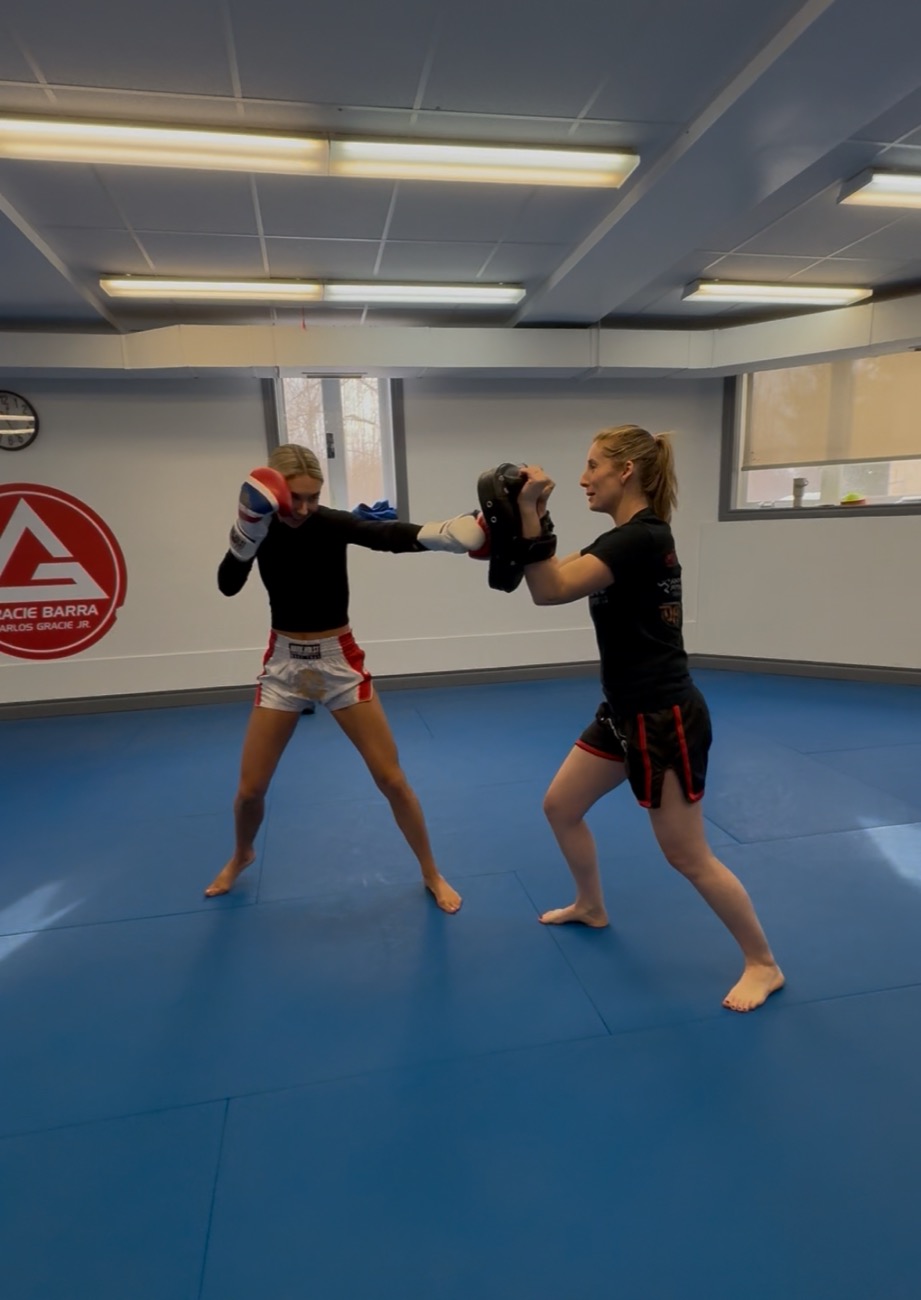
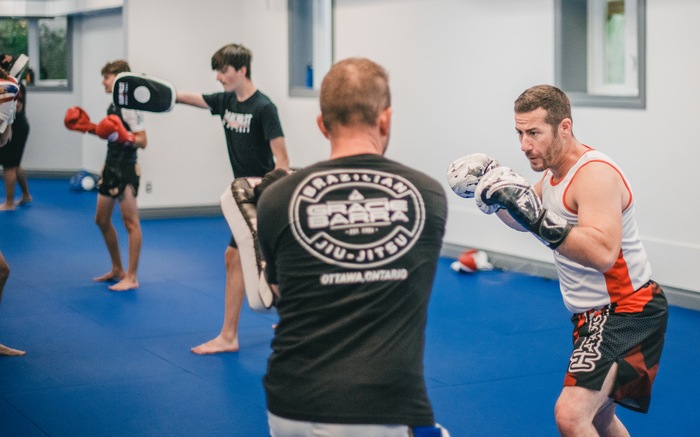
- Kids Muay Thai, Monday to Thursday at 6:30 PM. Muay Thai is a striking art using hands, elbows,
knees and shins, taught here on pads, which are the thick foam targets a coach or partner holds. Parents often type kickboxing into a search bar when this is the class they actually mean.
The whole schedule sits on our class schedule page, and the age groups for the younger students are set out on the kids Jiu-Jitsu page. Some schools call the training room a dojo. We just call it the mat, and it is the same mat for students of all ages, including our adult martial arts classes later each evening.
What a first class looks like for a four year old
A parent walks in with a child who has never done a structured activity. Here is the honest version of the next forty minutes. Your child keeps their socks on until the mat, then goes barefoot. A coach meets them at the edge, not in the middle. They line up with five or six other children who are also new-ish, and the first ten minutes is running, crawling and falling over on purpose, because learning to fall is the first real skill in this sport.
You stay. You do not have to hand a four year old over at the door and disappear on day one. Tell the coach it is their first time, sit at the side of the mat and expect a good number of new Tiny Champions to spend the first class holding a parent's hand for the first five minutes and then forgetting entirely that the parent is there. If your child melts down, that is information, not failure. We try again another week. Our first visit page walks through the practical parts, and no gi, which is the traditional training uniform, is needed for a first class.
What martial arts training will not do
This part matters more than the brochure part. Martial arts will not stop your child being bullied. No art can promise that, and anyone who says otherwise is selling something. What it can offer is narrower and truer: composure when someone puts hands on them, and the option not to escalate. That sits alongside the school and the adults involved, never instead of them.
It will not fix a diagnosis, and it is not a substitute for anything a paediatrician or a teacher is already doing. It will not turn a shy four year old into a loud one. And it does not come with a timeline. We do not tell parents when a black belt arrives, because we do not know, and any number we gave you would be invented.
What quality martial arts does reliably deliver is physical fitness, a room where a child learns socially and emotionally how to lose gracefully and the slow kind of confidence that comes from being visibly better at something in March than you were in September. Paediatric guidance also recommends non-contact skill work before any sparring for young children, and discourages mixed martial arts at this age. That matches how we run it.
Martial arts classes in Ottawa, and the fall window you are actually in
OCDSB students go back on Tuesday 1 September 2026, ahead of Labour Day on 7 September, which makes this an unusually compressed few weeks for south-end families. Most of the Manotick, Riverside South and Greely parents we meet are locking in the whole school year in about three weeks, and the 5:00 PM and 5:45 PM start times are the ones that fill first because they clear the dinner hour.
We are at 5700 Longshadow St in Manotick, one of Ottawa's south-end villages, with parking at the door and no downtown drive. Families come in from Findlay Creek, Osgoode and Kars, which is a fair reflection of how spread out the Ottawa community around this village really is. If you are comparing martial arts in Ottawa on a map, we are the one you can reach without crossing the city.
Ayla R, a Riverside South mom of two, brought her four year old in last September mostly because soccer had not gone well. The first class, he stood at the edge with his hands over his ears for about eight minutes. Coach Panda Dave gave him a spot on the wall to watch from and did not push. By the third week he was lining up on his own, and by November he was the one telling his mother it was Tuesday. She says the change she noticed first was not on the mat at all, it was that he started telling adults when something bothered him.
What parents ask us first.
What age can kids start jiu jitsu?+
Most academies, including ours, start structured Jiu-Jitsu classes at about age 3, and our Tiny Champions program runs for ages 3 to 5. Readiness matters more than the number, so a child who can follow a two-step instruction and speak up when something is wrong is usually ready.
Will martial arts make my child more aggressive toward their peers?+
In our experience the opposite is more common, because the whole class is built on control, stopping on command and respecting a partner's stop. We cannot promise a behaviour outcome for any individual child. What we can say is that aggression in class is corrected immediately, every time.
What do I need to bring to my first martial arts lesson?+
Nothing but water, comfortable clothes with no zippers or buttons and bare feet on the mat. We say no equipment is needed for a first class and we mean it, so leave the shopping until your child has decided they like it. Long hair tied back, nails trimmed short.
Will my child learn to defend themselves should they ever have to?+
They will learn real self-defence skills, and we will be honest about the limits. A real situation is unpredictable and can involve more than one person, so no art guarantees an outcome. The dependable benefit is composure under physical pressure and a much better instinct for avoiding trouble.