How does after school martial arts in Manotick fit into a real school-day routine?
After school martial arts in Manotick works because most south Ottawa elementary schools dismiss between 2:50 and 3:30 PM, and the first kids class at Gracie Barra Manotick starts at 5:00 PM. That leaves time for snack, homework, a short drive to 5700 Longshadow Street, and a family dinner after class. The academy program is built around that window.
The 3:20 bell to dinner: a real Manotick afternoon
Here is what the day looks like for a family in Manotick village, Riverside South, Findlay Creek or the newer builds on either side of the Rideau River.
2:50 to 3:30 PM: dismissal. Manotick Public School lets out around 2:50, Steve MacLean Public School and Riverside South Public School closer to 3:30. St. Leonard and St. Jerome sit in between. Bus routes add a few minutes at either end.
3:30 to 4:30 PM: snack and reset. Kids drop the backpack, eat something real, and change into training clothes. A gi and belt go in a small bag by the door. On class nights, homework that needs quiet gets done here, not after class when tired kids do not learn well.
4:30 to 4:50 PM: drive. From the village core to our door at 5700 Longshadow Street is a five-minute drive. From Riverside South or the newer Findlay Creek pockets, plan on 12 to 18 minutes depending on Bank Street or River Road traffic.
5:00 PM: class starts. Tiny Champions (ages 3 to 5) and Kids Jiu Jitsu (ages 6 to 13) both open the evening. Muay Thai for kids runs Monday to Thursday at 6:30 PM for families whose schedule works better an hour later.
6:00 PM: pickup. Classes are 45 to 60 minutes. Parents grab a coffee across the village, run one errand, or watch from the parent area. You are not stuck in the parking lot for an hour.
6:30 to 7:00 PM: home for dinner. A tired but talkative kid walks in the door, ready to eat.
That is the whole loop. Nothing about it depends on you being available at 3:20 PM.
What does a kids class actually do?
A common worry from parents new to martial arts: is my child going to be thrown into wrestling with older kids? No. Structure and age grouping do the heavy lifting, and every lesson is led by a hands-on instructor rather than a supervised free-for-all. Martial arts classes at the academy follow a clear, standardized lesson plan across every age group.
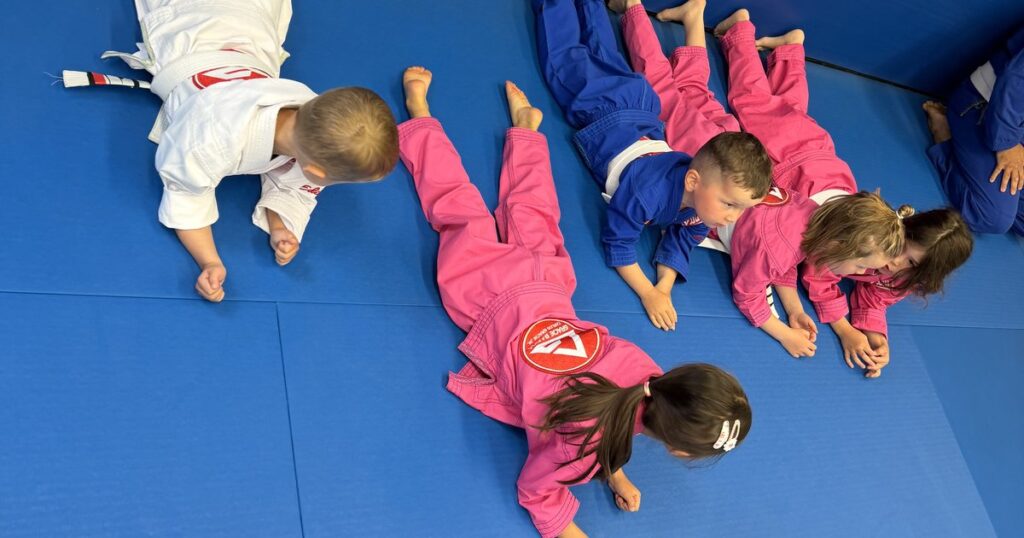
Tiny Champions (ages 3 to 5). Games first. Balance, listening, taking turns, a beginner grip on the gi, gentle contact through pads and drills. Coaches keep the energy up and the group small enough to actually see each kid.
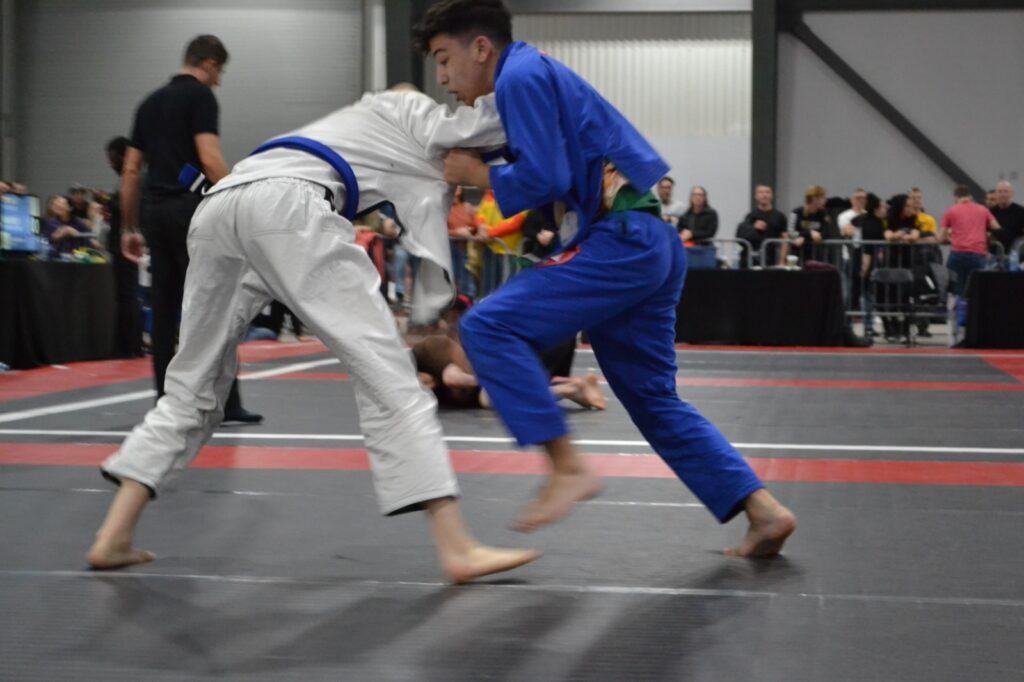
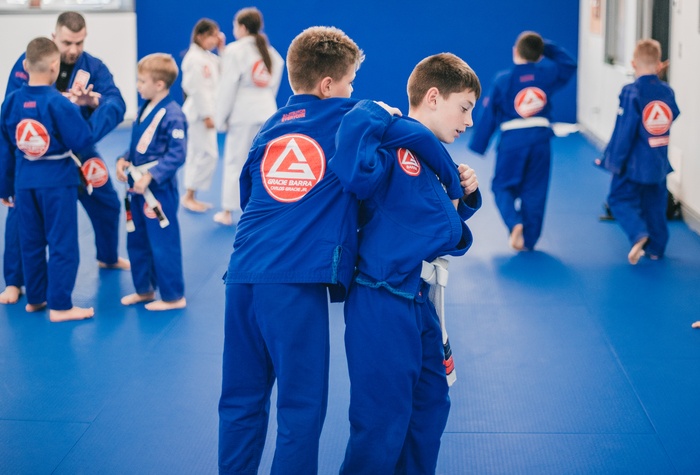
Kids Jiu Jitsu (ages 6 to 13). A warm-up, a technique of the day drilled in pairs, a short live segment against a partner their size, and a cool-down. Jiu jitsu is a grappling art, so the work happens on the mat with no strikes. If we teach a takedown, we teach a fall first. If we teach a submission, we teach the tap first. The tap is the pause button, it ends the drill, and every kid learns it on day one.
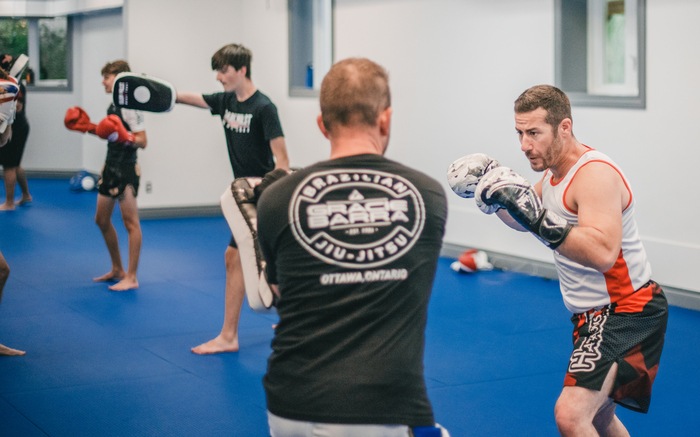
Kids Muay Thai. Pads and wraps. Kicking a coach-held pad, running combos with a partner, footwork games, no head contact for kids. Muay Thai is the striking side of the academy, and the pad work is where kids build confidence without anyone getting hit in the face. A confident child on the pads is often the same child who walks into a classroom the next morning a bit taller.
Kids move between disciplines as they grow. Some do only jiu jitsu, some only Muay Thai, some both. There is no lock-in.
You can see the full weekly schedule on our schedule page and the full kids program on the kids jiu jitsu page.
What kids actually take home from an after-school program in discipline and confidence
Parents ask us what changes. Small things, over months, that add up.
- Composure under pressure. A child who has learned to breathe under a controlled hold is calmer when a friend snatches a toy. Not automatic, but real.
- Focus that transfers. Following a three-step drill on the mat is the same skill as following a three-step math instruction in class. Coaches see it before teachers do.
- A body they trust. Balance, coordination, a stronger core. Falling without panic. This is age-appropriate fitness, dressed up as fun.
- A social circle outside school. Making new friends at the academy is one of the quietest wins of a martial arts program. Kids who never see each other during the day share a warm-up on Tuesday nights.
- Self-esteem that comes from earning something. Stripes on a belt are not participation ribbons. A kid who earns one knows exactly why.
- Teamwork with kids their own age. Partner drills need two kids to work, so cooperation and teamwork are baked into every lesson at the academy.
- A quiet kind of discipline. Showing up, tying the belt the same way each time, listening to a coach for 45 minutes; the discipline is small and repeatable, not military.
None of this is instant. Give any after school program six to eight weeks before you decide it is or is not working for your child.
How the after-school program compares to a day camp or a karate class
An after-school martial arts program is a weekly rhythm, not a day camp. Day camps fill a full school-off day; this fills 45 to 60 minutes on a school evening. If you are looking for a PD day camp or full-day summer activity, that is a different search. If you are looking for a weekly kids activity that runs September through June and lines up with the school year, this is it.
Parents also ask how we compare to a karate class down the road. Different arts, same idea of a structured lesson with a coach. Our program is jiu jitsu and Muay Thai instead of karate; the after school scheduling logic is nearly identical. Pick the discipline that appeals to your kid, then check the schedule for a fit. Learning martial arts is learning martial arts, whatever the specific art, and any quality martial arts school program in Ottawa should let you watch a class before you commit.
We also run birthday party bookings on weekends for kids in the program and their friends. That is separate from weekly training, and it is on the programs page rather than the class schedule.
Picking one night, two nights, or the family plan
The most common September question we get is "how often should my child train?"
One night a week is a real start, especially for a first martial arts program. Pick the class that fits the calendar the family already has, protect it, and let your child feel what a full month of a single weekly class actually looks like before adding a second.
Two nights a week is where kids start moving in a way parents notice. Skills stick, the group feels familiar, and the drive stops being a negotiation. If your kid is asking for more after four weeks, that is the signal to add a night.
Three or more nights is for the kid who has decided this is their sport. That decision comes from them, not from a schedule you built for them.
If two parents share the drive, a "Monday and Wednesday" or "Tuesday and Thursday" split lines up neatly with a working-parent household. Two adults, one car, one after school program, no juggling. Kids Muay Thai runs Monday to Thursday at 6:30 PM if the 5:00 PM jiu jitsu slot does not fit; some families do one of each in the same week.
There is no attendance minimum and no penalty for a quiet week. School plays, sick kids, and a big project the night before a due date all happen. Come back when the week calms down. Consistent martial arts training over a full school year matters more than a perfect month in October.
Our academy welcomes kids and adults from Manotick, Riverside South, Findlay Creek and Greely, and the parent room is a supportive place to sit through a class. Many families use the same evening to train side by side: a kids martial arts program at 5:00 or 6:30 PM, and an adult class at 7:15 or 8:15 PM. We are one of a handful of martial arts in Ottawa options for after school kids south of the river, in the village of Manotick, Ontario, and this is what families tell us actually makes the routine sustainable. Every lesson is built to promote focus, teamwork and coordination first, and skill second.
What it will not do
Martial arts will not "fix" any condition. It is not a substitute for a school-based support plan, a doctor, or a counsellor. It will not stop a child from being bullied at school, and any academy that promises that is selling something. What it can offer is composure, the option not to escalate, and a network of adults and peers who will notice a change in a child before you do.
We will also not tell you your six-year-old is a future world champion after week two. We will tell you what they are doing well and what they are still working on. That is the whole coaching job.
“My 2 kids love it. Friendly but motivating instructors.”
Frank GT, Google review, April 2026
Questions Manotick parents ask
What age can my child start after school martial arts in Manotick?+
Ages 3 and up. Tiny Champions is built for 3 to 5 year olds and Kids Jiu Jitsu covers ages 6 to 13. A short first visit lets a coach see where your child lands. Ages within a class are grouped further so a small five-year-old is not paired with a big seven-year-old.
How many days a week is enough for a kids martial arts program?+
One class a week is a real start. Twice a week is the sweet spot for a kid who wants to progress. Three or more is for the kid who has decided this is their sport. There is no minimum attendance rule and no penalty for a week off during a busy school stretch.
What does my child need for a first class?+
Just comfortable clothes and a water bottle. No gi needed on day one. If your child continues, we will fit them for a small gi at the academy so it is the right size for their next few months of growth.
Is after school martial arts safe for a six-year-old?+
Yes, when the class is age-grouped and coaches teach the tap and the fall before any pressure work. Kids Jiu Jitsu is a grappling art with no strikes. Kids Muay Thai uses pads and no head contact. Bruises happen, serious injuries are rare.
How do I know if my child will like it?+
The first class is free, and there is nothing attached to it. Bring your child, watch the class, ask the coach anything after. If it is not the right program, we would rather know that in the first week than the third month.