Should a beginner start with gi or no-gi?
Beginners can start with either gi or no-gi, and most people do not have to choose upfront. Training in the gi builds fundamentals, grip control and patience, while no-gi is faster and more dynamic. At Gracie Barra Manotick our beginner schedule mixes both, so new students meet each style in their first week.
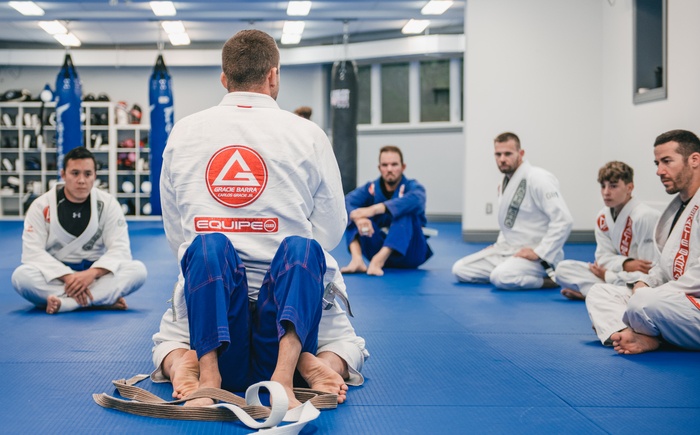
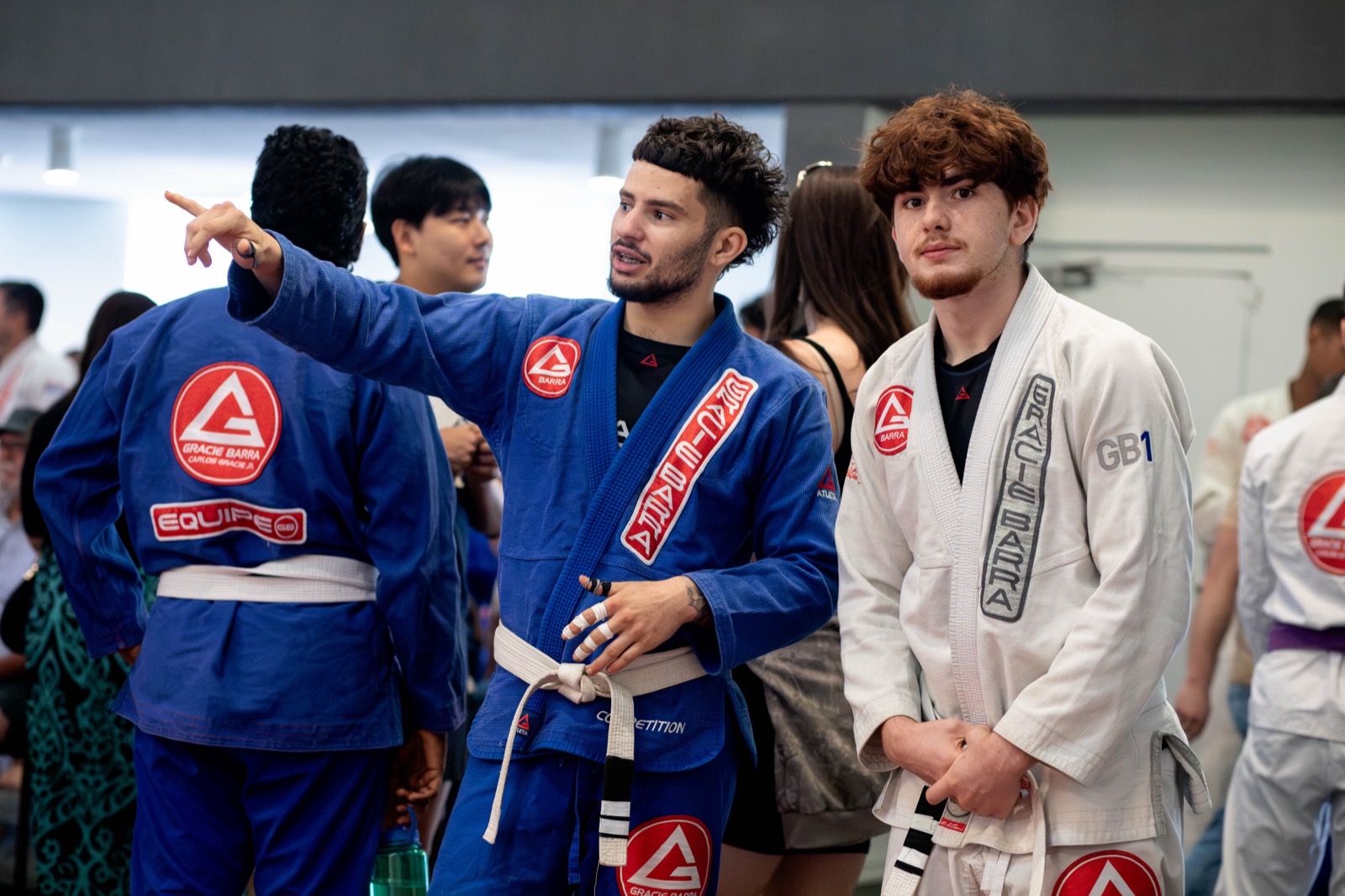
In Brazilian Jiu-Jitsu (BJJ) the gi is the traditional uniform: a heavy cotton jacket, trousers and a belt. No-gi means training without it, in a rashguard and shorts, where you grip the body instead of the cloth. Neither gi BJJ nor no-gi BJJ is the "real" jiu-jitsu, and neither is a beginner mistake. They are two versions of the same art, and the fastest learners usually do a bit of each.
Key takeaways
- You do not have to choose upfront. A beginner can start gi or no-gi, and most people train both within a few weeks.
- The gi builds fundamentals. Sleeve, collar and lapel grips slow the pace and teach control, patience and clean position.
- No-gi is faster and sweatier. It rewards movement and quick transitions, and it is the style closest to wrestling and MMA grappling.
- In Manotick, the beginner schedule mixes both. New students meet gi and no-gi in their first week rather than betting on one.
Gi vs no-gi: the key differences for beginners
If you want to learn how to grapple, both styles get you there, they just start you from different places. The whole gi vs no-gi question comes down to one thing: what you are allowed to hold. In the gi you grip the fabric, the sleeve, the collar and the lapel. In no-gi that fabric is gone, so you control an opponent with underhooks, wrists and the clinch. That one change drives most of the differences between the two, and it sets the pace of everything else.
| What to compare | Gi | No-gi |
|---|---|---|
| Grips | Sleeve, collar and lapel grips on the fabric | Grips on the body: underhooks, wrists and the clinch |
| Pace | Slower and more methodical | Faster and sweatier |
| What it builds first | Grip control, patience, precise fundamentals | Movement, scrambles, quick transitions |
| Closest cousin | Traditional jiu-jitsu | Wrestling and MMA-style grappling |
| What you wear | A gi jacket, trousers and a belt | A rashguard and shorts |
Read down that table of key differences and you can see why coaches disagree in good faith. The two styles reward slightly different habits, so which one is best for beginners depends on what you want to build first. That is really the answer that should help you decide.
What training in the gi teaches a beginner
The gi slows the game down, and for a beginner that is a gift. Those sleeve and lapel grips create friction, which buys you a half-second to think before an opponent moves. You learn to feel where the pressure is, when to be patient and when to go.
That is why so many coaches recommend you train gi first and treat it as your starting point. The grips force clean fundamentals: posture, base, framing and the small body mechanics that a faster style can paper over. They also slow a technique down enough that you can actually feel it working. Guard retention, escapes and control tend to stick better when the pace is methodical. Skills you build in the gi almost always translate to no-gi later, because good position is good position with or without the cloth.
What no-gi jiu-jitsu adds
No-gi is where the game speeds up. Without the gi to slow a scramble, transitions happen at a faster pace and you learn to move, frame and chain submissions on instinct. No-gi grappling is the version closest to wrestling and to the grappling you see in mixed martial arts (MMA), which is why so many competitors and MMA athletes drill it. Advanced no-gi even opens up leg attacks like heel hooks that the gi rules hold back, and it is the format used at events like ADCC. Plenty of beginners find no-gi training more intuitive because there is less to learn about the uniform.
The trade-off is that no-gi can feel slippery early on. Sweat and speed mean you cannot stall behind a grip, so mistakes get punished faster. That pressure is useful once you have a base, and it pairs well with the patience the gi teaches. This is exactly why a beginner does not have to pick: training both makes you a more well-rounded grappler, because the two styles cover each other's blind spots.
Is gi or no-gi easier for beginners?
Neither is truly easier, they are hard in different ways. No-gi feels faster and simpler at first because there is less gripping to learn, so many new students say it is easier to jump into on day one. The gi feels slower but more technical, and that slower pace is often easier to learn from, because you have time to notice what is happening. Each has its own advantage: no-gi hands you speed, the gi hands you time to think. Older beginners sometimes prefer the gi for that reason, while people who wrestled in school often lean no-gi. In practical, real-life terms most jiu-jitsu practitioners rely on both, so the honest guidance on the gi or no gi choice is simple. Try both and let your own body cast the deciding vote.
A realistic first month for a beginner in Manotick
Picture your first four weeks with us. You show up to a gi fundamentals class on a Monday, borrow a spare gi, and spend the hour drilling one escape and one grip, slowly, with training partners your own size. Nobody throws you into hard sparring. On Tuesday you try a no-gi class in a rashguard and shorts, and the same escape suddenly feels faster and looser. By week three you notice the patience from the gi showing up in your no-gi rounds, and the movement from no-gi showing up in the gi. For beginners in BJJ, that back-and-forth is the whole point, and it is why our beginner schedule runs both within the same week.
Dave R, a Riverside South dad who drives into Manotick twice a week, started convinced he had to choose. He picked the gi because a friend told him it was "proper" jiu-jitsu, then avoided no-gi for two months. When he finally tried a Tuesday no-gi class he realized his gi grips had quietly taught him control that carried straight over. Now he trains both, and he tells every nervous first-timer the same thing: you are not locking yourself in, you are just picking where to start.
How beginners train both at Gracie Barra Manotick
You do not have to solve this before you walk in. Our adult program, led by Coach Panda Dave, runs beginner-friendly gi fundamentals and separate no-gi classes across the week, so you can explore each without committing to one path. Sparring is its own class here, kept apart from the fundamentals hour, so your first weeks stay about learning rather than surviving. Have a look at the adult BJJ program and the weekly schedule and you will see gi and no-gi sitting side by side, which is exactly how we think a beginner should meet them.
Gi and no-gi, answered.
Should you train both gi and no-gi?+
Yes, most coaches recommend training both once you have found your feet. The gi builds patient, precise fundamentals and the no-gi builds speed and movement, and each covers a gap in the other. Beginners start with whichever is running when they arrive and add the second style within a few weeks.
Does training in the gi make you better at no-gi?+
Usually, yes. Grip fighting in the gi teaches control, timing and clean position, and good position carries over whether or not there is fabric to hold. Many practitioners feel their no-gi improves after a stretch of focused gi training, because the fundamentals transfer even though the grips do not.
What colour gi should a beginner get?+
A plain white gi is the safest first choice and is welcome in any class. Blue and black are common too, and most academies are relaxed about colour for beginners. If you are not sure, ask before you buy, and remember your first class needs no gear at all because we lend you one.
Is gi or no-gi better for self-defence?+
Both help, and neither guarantees an outcome. No-gi is closer to how a real situation looks because most people are not wearing a jacket you can grip, while the gi builds the control and composure that matter under pressure. The honest benefit of either is confidence, awareness and the option to stay calm, not a promised result.