Does martial arts help with bullying?
Martial arts help with bullying indirectly, not by teaching a child to win fights. Training builds composure under physical pressure, steadier posture and the confidence to say no out loud. Research links structured, instructor-led martial arts to lower aggression and higher resilience in children. No martial art stops bullying on its own. Adults and schools still have to act.
What martial arts training changes first, and how kids build confidence
The first changes are physical, and small enough that most parents miss them for weeks.
A kid who has been calmly held down and worked their own way out stops flinching when someone crowds them. That is the whole mechanism. Panic makes a child freeze, and a child who has felt that pressure a hundred times in a safe room does not spend the first three seconds of a confrontation panicking. Those seconds are the difference between saying something and saying nothing.
What parents notice, in rough order:
- Posture. Head up, shoulders back, less of the folded-in stance that marks a child as an easy target.
- Eye contact. Holding a gaze a beat longer instead of looking at the floor.
- Voice. Saying "stop" at a volume an adult six metres away can hear.
- Willingness to say no. Out loud, in the moment, without rehearsing it first.
Be honest about the timeline. This is a slow build measured in months, not a fix measured in weeks. A shy kid does not walk out of their first class transformed, and anyone who says otherwise is selling something. Self-confidence comes from accumulated evidence, and that takes time.
The research agrees. A randomized trial of 283 primary school children aged 8 to 12 found a ten-week traditional martial arts program improved resilience and self-efficacy while those measures declined in the control group. Real, measurable and modest. Not a personality transplant.
Does Jiu-Jitsu help with bullying?
Jiu-Jitsu fits this problem better than most arts, for one plain reason. Bullying at school is rarely a boxing match. It is a shove, a grab at a backpack, a kid sitting on another kid. That is grappling, meaning wrestling for position rather than striking, and it is exactly what jiu-jitsu trains.
Brazilian Jiu-Jitsu teaches a child to escape a grab, get out from underneath someone and create enough space to stand up and leave. None of that requires a punch or a kick. That matters more than it sounds, because a child who answers a shove with a fist is the child who gets suspended, regardless of who started it. A child who stands up, steps back and walks to a teacher has not broken a school rule.
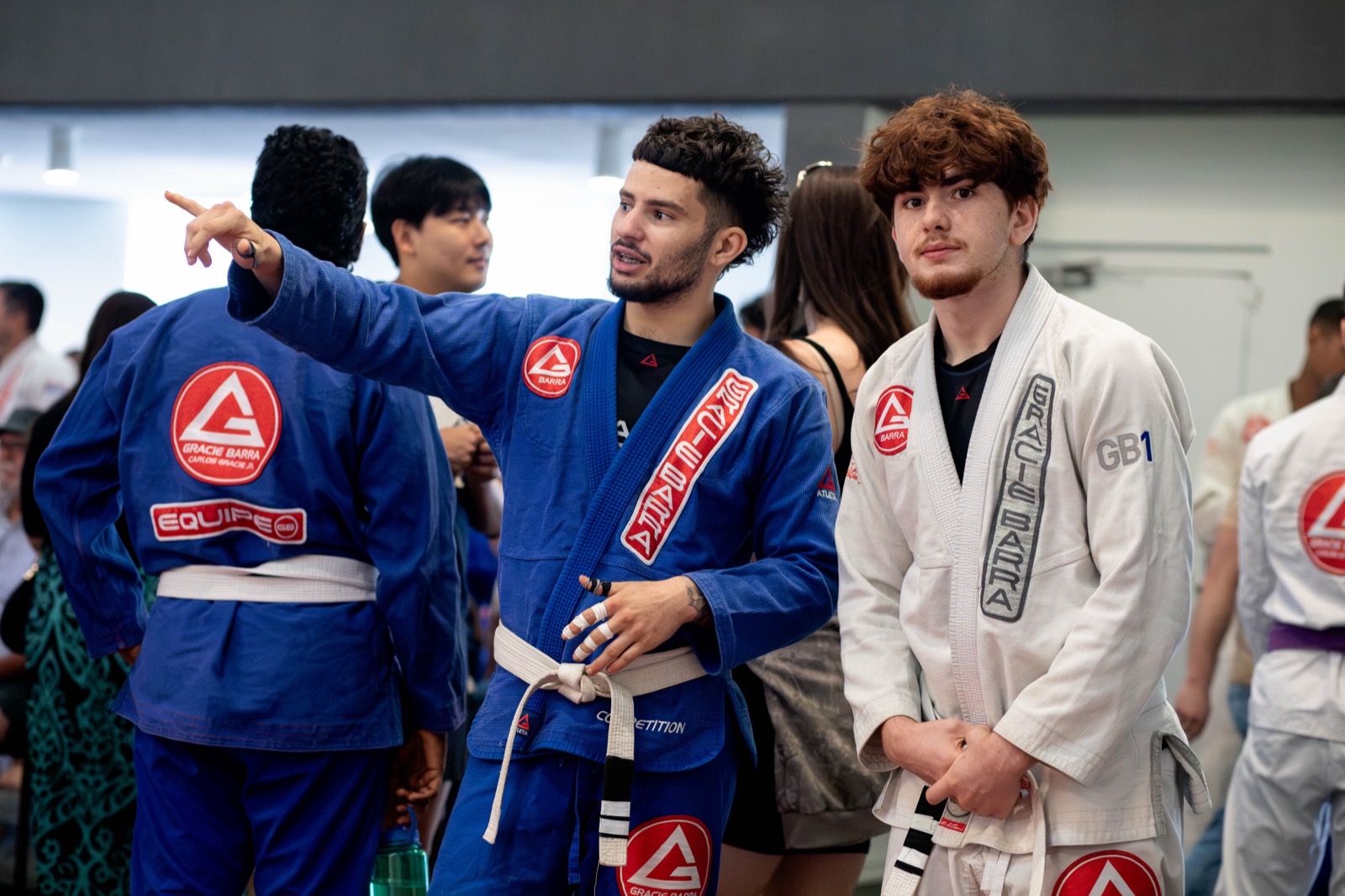
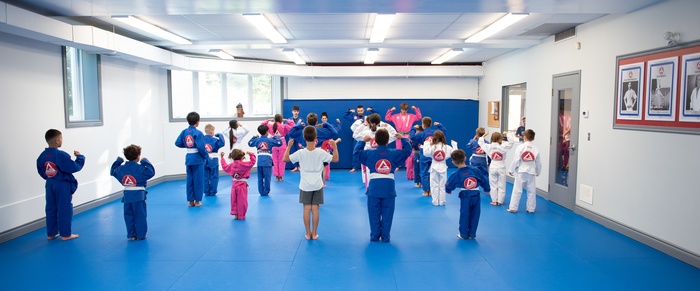
Another benefit. Because jiu-jitsu has no striking, kids can spar, meaning practise against a resisting partner, at realistic intensity without taking shots to the head. Emotional regulation under physical stress is a skill built only under physical stress. Our Kids Jiu-Jitsu program runs Monday through Friday at 5:45 PM and Saturdays at 10:30 AM, and that is where most of this work happens.
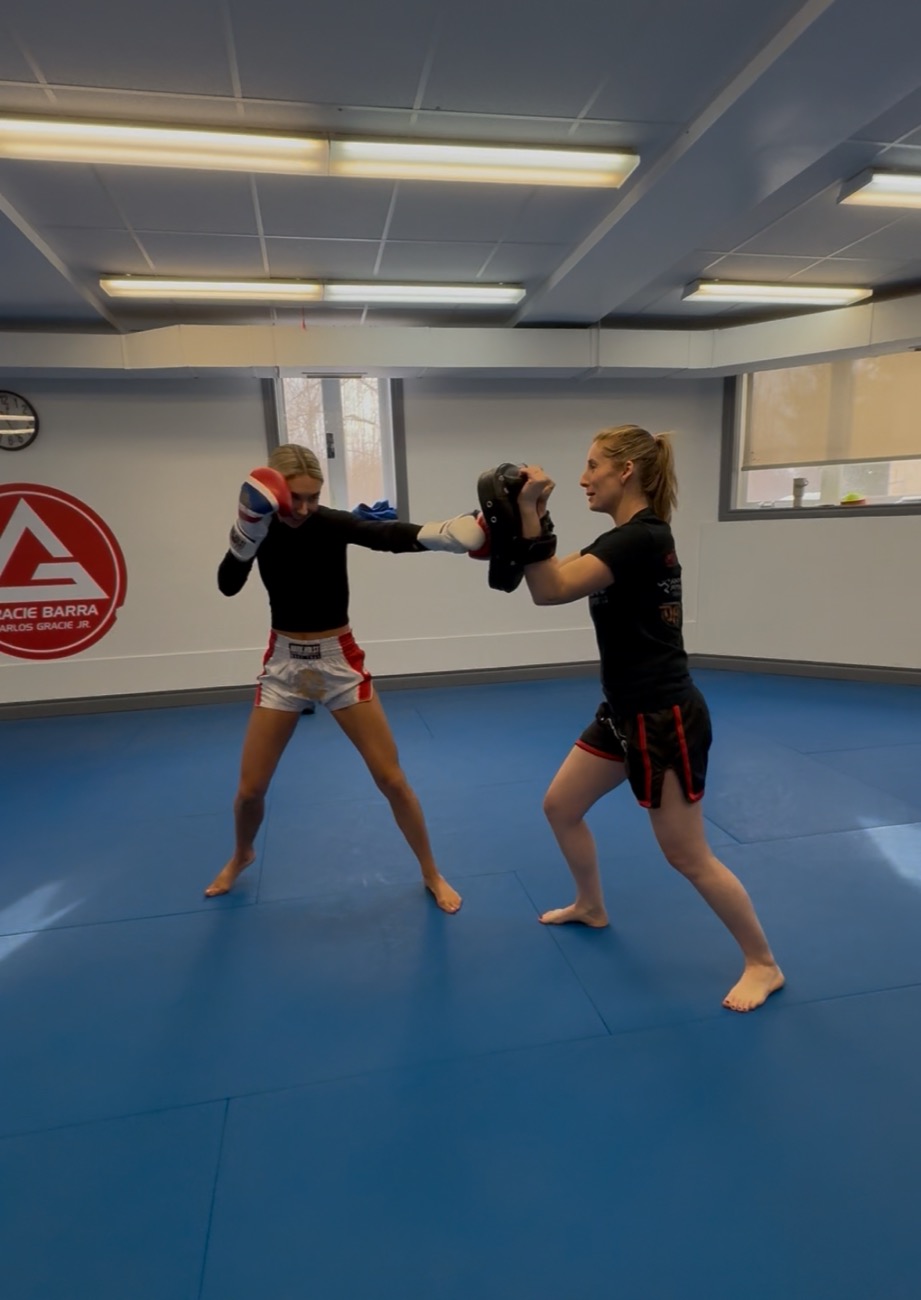
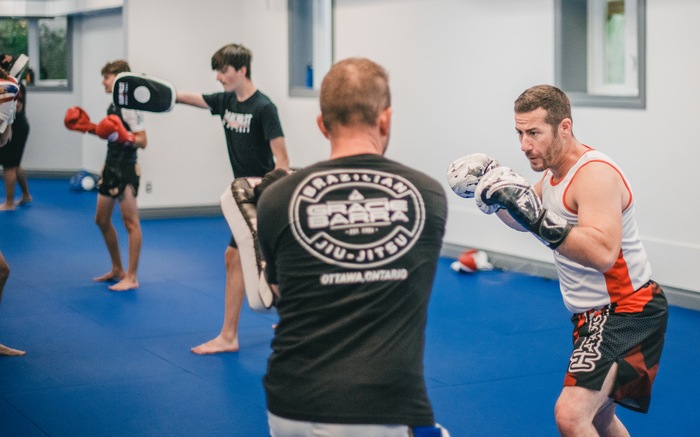
We teach the striking side as well. Kids Muay Thai runs Monday through Thursday at 6:30 PM and builds coordination, timing and self-discipline.
Which is the best martial art for kids dealing with bullies?
There is no single best martial art for kids, but the arts split into two groups and one fits this problem better.
Grappling arts cover Brazilian Jiu-Jitsu, judo and wrestling. They teach control, escapes and takedowns, all usable without striking anyone. Striking arts cover karate, taekwondo, boxing and Muay Thai. They teach a child to punch and kick with timing, and build real self-discipline and coordination.
For a child being shoved, grabbed or held down, grappling gives more directly usable self-defence skills. The reason is practical. A child who ends a shoving match by controlling someone and standing up has done nothing a principal can call fighting. A child who answers a shove with a kick has, whatever the provocation.
That is not an argument against striking arts. Karate and taekwondo carry the deepest research base here, and most studies showing reduced aggression in children ran in traditional karate and taekwondo programs. What those programs share is not the art. It is a curriculum built on rules, respect and self-control, taught by an instructor who enforces them.
Choose the room, not the art.
Will martial arts make my child aggressive?
This is the fear underneath the question, and it deserves a straight answer.
The evidence points the other way, with conditions attached. A meta-analysis of twelve child and youth studies found eleven showed reduced externalizing behaviour, including physical aggression and bullying, with a medium average effect. A school study of 254 grade five students found that boys who attended more sessions of a martial arts based anti-bullying curriculum reported less aggression and were more likely to step in for a classmate, and that the change ran through increased empathy.
Now the conditions. A 2026 systematic review in Frontiers in Public Health looked at eleven longitudinal studies and found no consistent direction. Some programs reduced aggression, some changed nothing, and a few saw it rise. The training environment decides the outcome. Programs built on rules, respect and self-control reduce aggression. Loosely supervised rooms where winning is the only value sometimes do the opposite.
So martial arts do not make a child aggressive, but a badly run room can. Ask about the instructor and watch a class before enrolling your child anywhere. If the coaching is hands-on and the rules are enforced, the aggression question mostly answers itself.
What martial arts will not do for bully prevention
No martial art will stop your child being bullied. We will not tell you otherwise, and any bully prevention program promising it is overselling.
A study of 331 young karate athletes aged 11 to 18 found that more than three quarters had experienced at least one form of bullying. Read that carefully. Kids often start martial arts classes because they are already being targeted, and the training does not automatically end it. Bullying is a group behaviour driven by social status and bystanders, and one child's grappling does not change a classroom's norms.
Be sceptical of any anti-bullying program promising your child will be less likely to be targeted. The effects of bullying are psychological as much as physical, and no belt fixes that. What martial arts training does is help children build self-esteem, self-control and a calmer response to confrontation. Worth having. Not a guarantee.
The evidence on fighting back is worse than most parents expect. Children who hit back are more likely to still be bullied six months later. In one long-running study, boys who fought back saw no change in how often they were victimized, while boys who brought in a friend saw it drop. Retaliation is a poor strategy, and it is the one most parents quietly hope martial arts will teach.
What works is adults. PREVNet, the Canadian research network on bullying, puts it plainly: bullying is a relationship problem that requires relationship solutions. Their parent guidance is to take the report seriously, tell the school, keep a written record, work with staff on a plan and follow up over weeks. Whole-school programs reduce victimization measurably. One child's training does not.
Training sits alongside all of that. Never instead of it.
How to outsmart a bully without a physical fight
What we actually teach kids, in order, is unglamorous:
1. Leave if you can. Walking away is a decision, not a failure. It works and it risks nothing. 2. Say it loud and say it once. "Stop. I don't like that." Head up, eyes on them, said at a volume that carries. 3. Tell an adult, then tell another one. It often takes more than one before anything changes. That is not a reason to stop. 4. Stay with people. Kids are targeted far less often when they are not alone. 5. Use your hands only to protect yourself and get away. Control, stand up, leave. Not a punishment, not a lesson, not a fight.
That last one is a distant fifth on purpose. The tools your child needs are mostly verbal and social, and the physical skill exists so they can stay calm while using the other four. Standing up to bullies almost never means hitting one, and a child who understands that is far less likely to retaliate in a way that backfires.
Bully prevention for a shy kid in south Ottawa
Every September we meet a few families in the same situation. A quiet kid has had a rough couple of weeks in a new class, the parents have talked to the school, and they want something they can actually control.
For a shy child, the room matters more than the art. Ours is small enough that a coach knows your kid's name in the first week, and classes are taught hands-on. Coach Panda Dave leads the coaching team and teaches both jiu-jitsu and Muay Thai. Kids get partnered deliberately, and nobody is asked to spar on day one.
We are at 5700 Longshadow St in Manotick village, with parking at the door, and families drive in from Riverside South, Greely and Findlay Creek. The full schedule is here, and you are welcome to sit and watch a class.
Sarah M, a Manotick mom of two, brought her nine year old in last October after a hard stretch at school. He spent his first month at the edge of the mat and said almost nothing. What changed first was not technique, it was that he stopped asking her to stay in the building. By the spring he was answering adults without looking at the floor. The school handled the bullying, which is where it belonged, but he walked into those conversations differently.
What parents ask about bullying.
Does martial arts help with bullying?+
Martial arts help indirectly, by building composure under physical pressure, steadier body language and the confidence to speak up. Studies link structured, instructor-led training to lower aggression and higher resilience in children. No martial art stops bullying on its own, and adults and schools still need to act.
Does Jiu-Jitsu help with bullying?+
Jiu-Jitsu fits the problem well because most school incidents involve grabbing and shoving rather than striking. It teaches a child to escape a grab, get out from underneath someone and create space to leave, all without throwing a punch or a kick. That keeps a child safe without breaking school rules.
Will martial arts make my child aggressive?+
The evidence points the other way in rooms built on rules, respect and self-control, where studies consistently find reduced aggression. A recent systematic review found the effect depends heavily on the training environment rather than the art itself. Watch a class and meet the instructor before you enrol.
Is my child too shy for martial arts classes?+
Shy kids do well here, and a good number of our students started that way. Nobody is asked to spar on their first day, partners are chosen deliberately and coaches teach hands-on rather than leaving children to sort it out. The first class is free, so there is no commitment involved in finding out.